THE PRODUCTS PURCHASED ON THIS WEBSITE ARE INTENDED FOR RESEARCH CHEMICAL USE ONLY. These products are not intended to be used for human or animal consumption and/or ingestion of any kind. These products should not be used as food additives, drugs or household chemicals. These products should only be used by Qualified Professionals.
Bodily introduction into Human and Animals of any kind is strictly forbidden by law.
All the product information on this website is for educational purpose only.
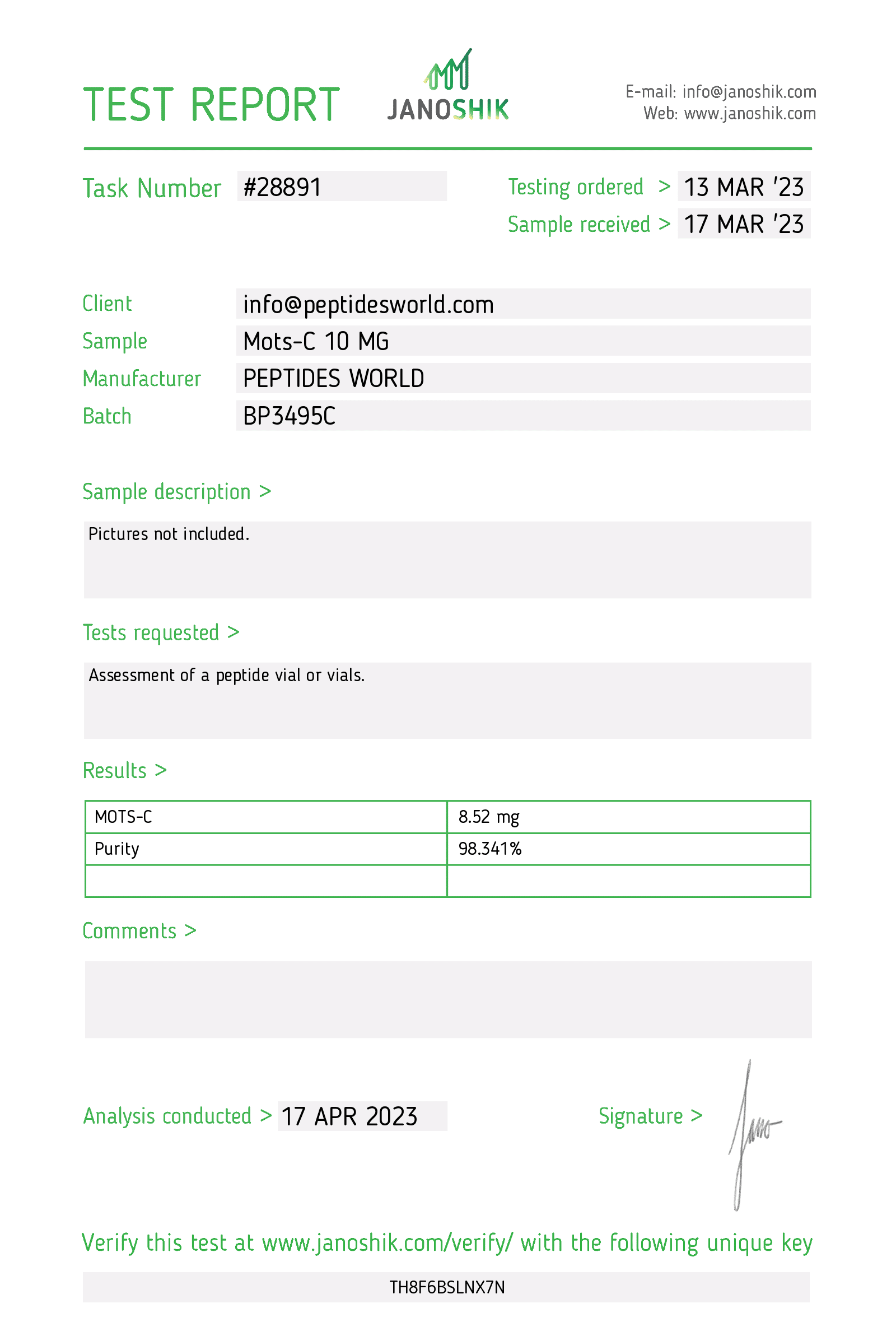
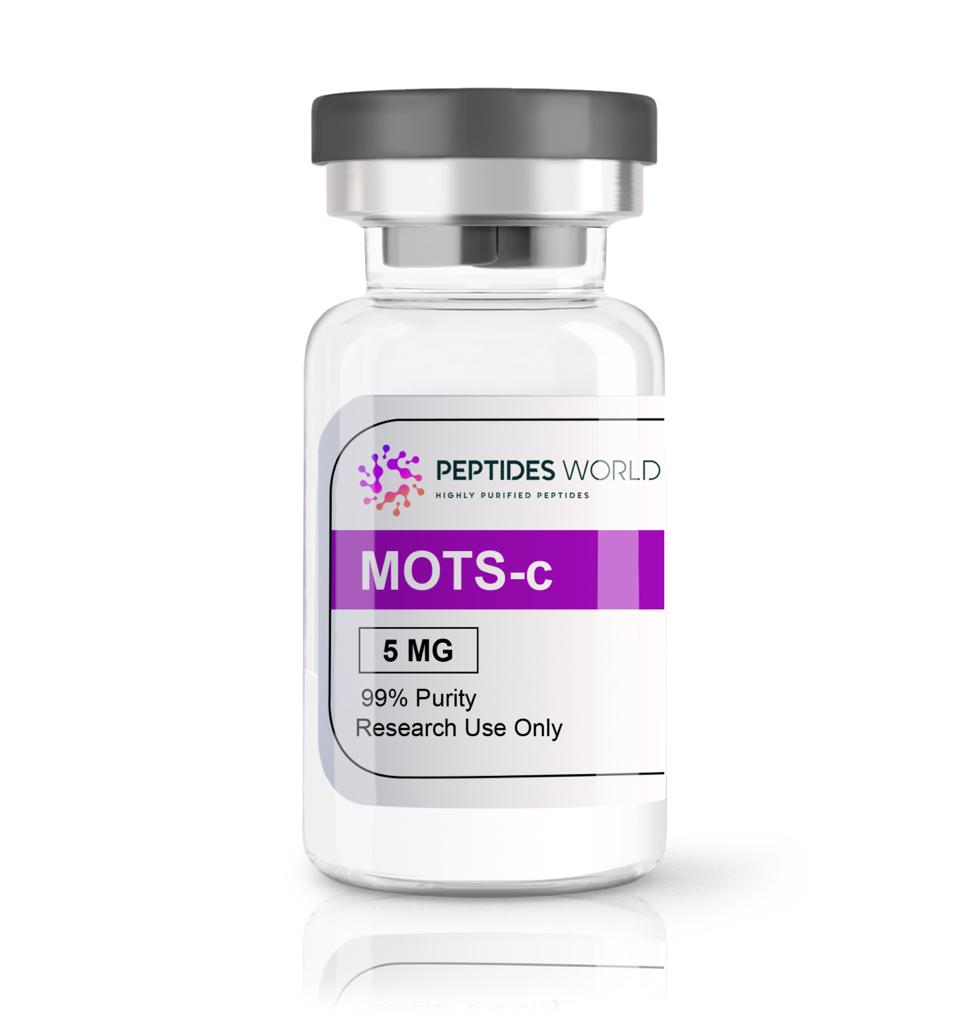
MOTS-C is intended for research and medical purposes only, to be used by trained professionals.
Research has suggested MOTS-c is an exercise mimetic, a 16-amino-acid peptide that is encoded in the mitochondrial genome of cells. According to clinical studies, it improves insulin sensitivity. While the study is still ongoing, control group examinations using diet-induced obese mice have shown improvements in insulin sensitivity. Researchers are still studying to see if the MOTS-c changes plasma markers, which are used to determine the body’s metabolic condition.
Research has shown that MOTS-C targets body muscles and regulates its metabolism using the folate-purine-AMPK pathway. By doing so, it becomes effective protection against obesity and insulin resistance that stems from the diet that one is taking or age.
HOW MOTS-C PEPTIDE REGULATES GLUCOSE
Clinical studies have shown that MOTS-c promotes the production of endogen AMP analogue AICAR, which in turn, helps in the synthesis of AMP-activated protein kinase [1] (also referred to as AMPK). Before the production of AMPK, its cellular actions inhibit the folate cycle along with de novo purine biosynthesis. The AMPK then induces systemic cellular uptake of glucose and enhances insulin sensitivity. These studies suggest the mitochondria [2] offer active regulation of metabolic homeostasis via this peptide encoded in their genome.
Research has confirmed that the peptide genome can help reduce insulin resistance [3]. Health experts recommend taking the medication along with a strict, balanced diet to lower the amount of fat taken to manage obesity. Other studies have shown that general weight gain may increase insulin insensitivity, especially on diabetes type 1 patients. Cutting down the fat intake and increased levels of MOTS-c may lower the diet-induced metabolic dysfunction and associated inflammation.
References:
[1] https://physoc.onlinelibrary.wiley.com/doi/full/10.14814/phy2.14171
[2] https://www.cell.com/article/s1550-4131(15)00061-3/abs
[3] https://www.ncbi.nlm.nih.gov/pmc/articles/PMC5801219/
FAQ
1: What is MOTS-c?MOTS-c is a mitochondrial-derived peptide consisting of 16 amino acids, often described as an exercise mimetic in research contexts. It's encoded in the mitochondrial genome and studied for potential effects on metabolism, energy regulation, and cellular processes.2: Is MOTS-c for Human Use?No, products like MOTS-c from Peptides World are strictly for research use only, intended solely for in vitro testing and laboratory experimentation. Introducing it into humans or animals is prohibited by law, and it's not approved for therapeutic or personal consumption.3: What are the Research Benefits of MOTS-c?Research suggests MOTS-c may support fat loss, improve insulin sensitivity, enhance endurance, and promote metabolic health as levels decline with age. It's explored for longevity, muscle recovery, and mimicking exercise effects at the cellular level.4: What is the Dosage in Studies?Typical research protocols start with doses around 5mg per injection, supplied as reconstitutable powder with bacteriostatic water. Frequency and exact protocols vary, but shaking the mixture during reconstitution should be avoided to prevent degradation.5: Are There Safety Concerns?Research-grade MOTS-c may contain impurities leading to risks like immunogenicity, and it's not recommended for non-research purchase due to safety issues. It's prohibited in supplements and monitored for athletic use.